

Understanding Rainwater Harvesting
Explore the methods, structures, and benefits of conserving water in rural, urban, and industrial environments.
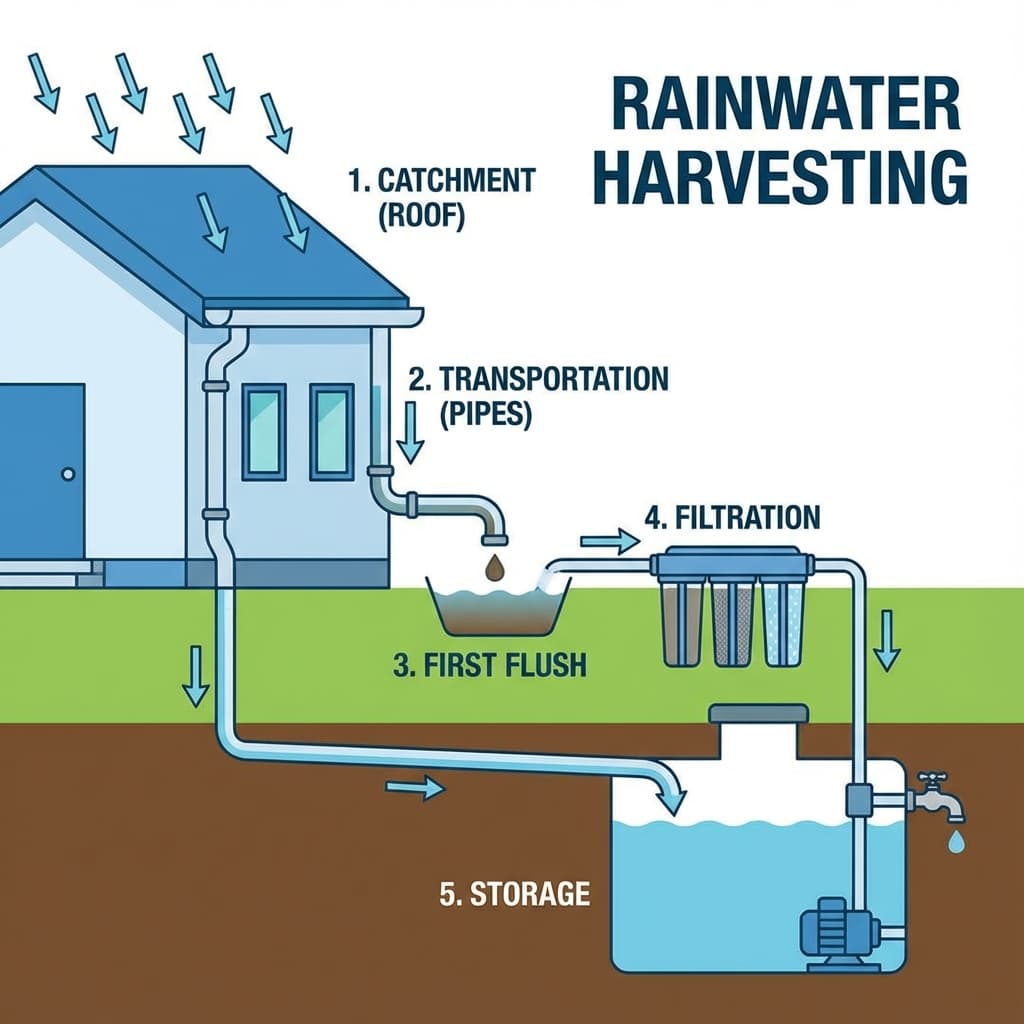
Sequence of Harvesting
The 5-Step Process
- 1CatchmentThe surface (roof or ground) that directly receives rainfall.
- 2TransportationChannels, gutters, or pipes that carry water from catchment to storage.
- 3First FlushDiverting the initial rain to flush out accumulated debris and contaminants.
- 4FiltrationRemoving suspended pollutants to ensure water quality.
- 5Storage / RechargeCollect water in tanks for use or recharge groundwater aquifers.
Structures in Rural Areas
In rural areas, large-scale groundwater development for irrigation has led to withdrawal rates exceeding natural recharge, causing rapidly declining water levels. Conversely, low-lying areas often face water stagnation and flooding during rains, damaging crops.
Solution: This excess surface water can be effectively utilized to recharge groundwater aquifers under gravity.
- Recharge Pit
- Recharge Trench
- Recharge Well / Injection Well
- Recharge Shaft
- Ponds / Reservoirs / Farm Ponds
- Surface Storage
- Dug & Defunct Bore Wells
Structures in Urban Areas
Rapid urbanization and population growth in cities have led to increased water demand and immense pressure on groundwater resources. Harvesting water from rooftops and paved pavements is essential.
Impact Potential
"From a Roof Top of 100 sq. meter area with annual rainfall of 1000 mm, 80,000 liters of rain water may be conserved or recharged every year."
Structures in Industrial Areas
Suggested Methods
- 1Recharge Pits
- 2Recharge Trench
- 3Surface Storage / Pond
Critical Guideline
In industrial areas, the 'Recharge Well / Injection Well' method should not be adopted to prevent potential groundwater contamination from industrial effluents.